
Browse Exhibits (2 total)
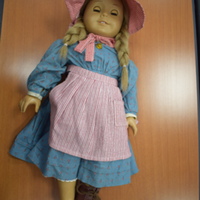
Dolls and action figures have been providing imaginative entertainment to children for centuries, dating as far back as Ancient Rome where children played with dolls made of cloth, wood, terracotta, bones, and ivory. Psychologists suggest that imaginative play goes beyond its entertainment value but allows children to explore interpersonal relationships, communication, creativity, and emotional regulation. Further, dolls and action figures provide children with a safe environment with minimal consequences to develop these necessary life skills.
Adults also benefit from owning dolls and action figures. Similar to children, engaging with these types of toys give adults an outlet to express their creativity and escape from the stresses of daily life. Additionally, it serves as a touchstone back to their childhood, bringing a sense of nostalgia and reminiscing.
This exhibit uses items from the 2026 Internal History Harvest that tells the story of dolls and action figures influencing individuals’ lives. Each item has a unique story touching on points of childhood memories and adult free will. The two American Girl Dolls and the Batman action figure hold strong childhood memories of family, vacation, and gifts. While the Mothman,Star Wars, and Batman Funkopop action figures demonstrate that imagination transcends childhood and it is never too late to express imagination and wonder.
References:
Harlow, Mary. “Toys, Dolls, and the Material Culture of Childhood.” In The Oxford Handbook of Childhood and Education in the Classical World, ed. Judith Evans Grubbs, Tim Parkins, and Roslynne Bell. Oxford University Press, 2013.
Helijakka, Katrina and J. Tuomas Harviainen. “From Displays and Diorama to Doll Drama: Adult World Building and World Playing with Toys.” American Journal of Play 11, no. 3 (2019): 351-378.
Keough, Kathryn. L. “The Power of Pretend Play for Children.” Child Mind Institute, Published March 24, 2025, https://childmind.org/article/the-power-of-pretend-play-for-children/

This exhibit features a wide variety of figures, primarily originating from the 2000s and 2010s, that both reinforce and challenge gender norms. They include American Girl dolls, plushies, collectable figures, as well as a 3D printed figure.
In the nature vs. nurture argument, gendered play is decidedly nurture based. Like most things, gendered play is taught by parents and society. Without interference, children do not have the comprehension ability to choose a “girl” toy or a “boy” toy; they choose what seems the most interactive/fun to them. While often viewed as nothing more than mere objects of entertainment, toys are also a reflection of the gender norms that America’s youth are raised under. From the traditionally feminine American Girl dolls that encourage caring and confidence, to the stereotypically masculine Star Wars action figures that emphasize strength and justice, toys such as those displayed in this featured exhibit have reinforced the expectations of what it means to be a girl or a boy.
Despite that, these expectations are not wholly restrictive, nor are they deterministic of how children interact with their toys. A boy playing with an American Girl doll or a girl imagining herself as the hero of an adventurous tale is a perfect demonstration of how figures such as these can challenge the traditional boundaries associated with gender. Additionally, toys such as LEGO and 3D-printed figures exist outside of traditional gender expectations. By allowing children to develop their own characters, stories, and ways of play, these toys help challenge the notion that certain toys are gender exclusive. By examining these gender norms in childhood through the lens of figures, we can begin to consider how traditional gender expectations are both reinforced and challenged through play.
In what ways do you think the figures featured in this exhibit reflect or challenge gender norms in America?
Sources:
Caldera, Yvonne M., Aletha C. Huston, and Marion O’Brien. “Social Interactions and Play Patterns of Parents and Toddlers with Feminine, Masculine, and Neutral Toys.” Child Development 60, no. 1 (1989): 70–76. https://doi.org/10.2307/1131072.
Pope, Cydne. The Social and Economic Consequences of Gendered Toys in America. 2015. Student Research and Creative Works. University of Puget Sound. https://jstor.org/stable/community.36513972.
Sweet, Elizabeth Valerie. , 2013. "Boy Builders and Pink Princesses: Gender, Toys, and Inequality Over the Twentieth Century." Order No. 3614279, University of California, Davis. https://uis.idm.oclc.org/login?url=https://www.proquest.com/dissertations-theses/boy-builders-pink-princesses-gender-toys/docview/1517101640/se-2.